Seborrheic Dermatitis on the Scalp With Coily Hair: What Helps
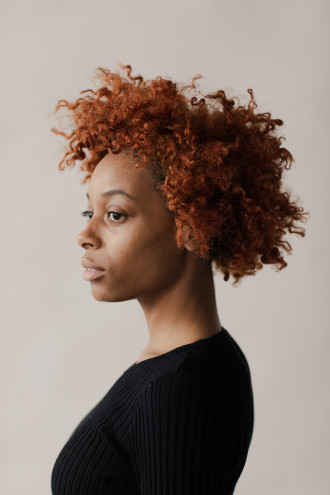
Hadiyah Daché, licensed cosmetologist & esthetician
Hair
8 min
← All articlesThe Book →
If your scalp flakes no matter how much oil you put on it, the oil might be the problem. Seborrheic dermatitis on the scalp is an inflammatory reaction to yeast that feeds on your scalp's own oil, and with Black hair it often gets mistaken for a dry scalp and treated with exactly the wrong thing. Greasing the scalp, stretching wash days to two or three weeks and layering heavy butters can all make it worse.
I'm a licensed cosmetologist and esthetician, not a trichologist or a dermatologist, so this post comes at it from the scalp up: what's happening on your scalp, how to tell it apart from dryness and build-up, and how dermatologists say to use medicated shampoo when your hair is coily and you are not about to wash it three times a week.
Why do I have seborrheic dermatitis on my scalp?
Seborrheic dermatitis shows up where your skin makes the most sebum (the oil from your glands), and the scalp is the top spot. A yeast called Malassezia lives on everyone's skin and eats that oil. Breaking sebum down releases free fatty acids, and in some people those fatty acids set off inflammation. That inflammation is what you see and feel as itch, flaking and a change in skin color.
If Malassezia sounds familiar, it's the same yeast behind what the internet calls "fungal acne," which I've already explained isn't acne at all. Researchers still argue about how much of seborrheic dermatitis is the yeast itself and how much is the way your skin reacts to it. A 2019 review in the Journal of Drugs in Dermatology notes that several studies link more yeast to worse symptoms, while at least one older study found no difference in yeast counts at all. Either way, you didn't catch it from anyone, and it isn't a sign that you're dirty.
It's also part of the dermatitis family, so if you've read my eczema explainer, you've met it before. It's chronic, which is why the AAD talks about a weekly maintenance wash even after a flare settles.
What does seborrheic dermatitis look like on Black hair and darker skin?
On deeper skin it often isn't red. The American Academy of Dermatology describes scalp seborrheic dermatitis on darker skin tones as pink, slightly purple, or lighter than your normal skin, and some people get white spots on the scalp. Around the hairline, eyebrows and sides of the nose it can look darker than your skin instead.
The flakes can be dry and powdery, greasy and yellowish, or both. DermNet describes two patterns seen in darker skin types:
- Lighter patches with scale (hypopigmentation) in the usual seborrheic spots
- Petal-shaped or ring-like patches, called petaloid seborrheic dermatitis
Those color changes come from the inflammation, and the Cutis review I cite below calls lighter patches a common concern with seborrheic dermatitis in Black patients. For light patches at the hairline, face or ears, dermatologists sometimes use non-steroid prescription creams. Scratching and picking at flakes can add dark marks of their own, so treat the itch instead of digging at it with a rat-tail comb.
Seborrheic dermatitis vs dry scalp vs product build-up: how do I tell?
Look at the flakes and at what makes them better or worse. This table is how I'd sort them, with the big caveat that only a dermatologist can confirm what you have.
| Seborrheic dermatitis | Dry scalp | Product build-up | |
|---|---|---|---|
| Flakes | Greasy, yellowish or white, often stuck to the skin; can be large | Small, white, powdery, fall easily | Waxy or chalky, clumped on hair near the roots |
| Scalp underneath | Pink, purple, lighter or darker patches; can look oily | Tight, no visible rash | Coated, itchy, normal color once washed |
| Also shows up | Eyebrows, sides of nose, behind ears, beard | Often with dry skin elsewhere in winter | Wherever you apply gel, edge control or butter |
| Oil on the scalp | Usually worse | Usually better | Usually worse |
| After a good wash | Back within days | Better, then tight again | Gone until you re-apply |
The giveaway for seborrheic dermatitis is rash plus scale in the oily zones of your face, not only your scalp. Flakes in your eyebrows or creases beside your nose point away from plain dryness.
Why does washing Black hair less often make seborrheic dermatitis worse?
Because the yeast and the oil it feeds on sit on your scalp until you wash them off. That 2019 review states that infrequent shampooing and heavy use of hair oil and pomade can aggravate seborrheic dermatitis in Black women.
There's a structural reason too. A 2025 article in Cutis by dermatologists including Amy McMichael explains that tightly curled hair keeps sebum from travelling down the hair shaft, so it collects on the scalp. The same authors note that some Black patients wash only once a month, and that braids, wigs and weaves change wash schedules. Add a scalp oil on top of all that and you've given Malassezia a buffet.
Nobody is telling you to wash 4C hair every day. The fix the Cutis authors give is more targeted: put oils on the lengths and ends of your hair, not on your scalp. Your hair may love that Jamaican Black Castor Oil. Your inflamed scalp does not need it.
What is the best treatment for seborrheic dermatitis on a scalp with Black hair?
Medicated shampoo, used on the scalp, left on long enough to work, and repeated on a schedule you can keep. The AAD says dermatologists often suggest once a week for curly or tightly coiled hair, compared with two or three times a week for straight hair, and a once-weekly wash to prevent flare-ups once it's under control.
These are the active ingredients dermatology sources list for the scalp:
- Ketoconazole, an antifungal. The Cutis authors warn it can dry the hair shaft and lead to breakage, especially if you also use heat or relaxers, so they advise applying it straight to the scalp.
- Zinc pyrithione, common in over-the-counter dandruff shampoos and one of the options the same authors say may carry fewer risks for Black patients.
- Selenium sulfide, another over-the-counter option. DermNet suggests it, or zinc pyrithione, when yeast stops responding to azoles like ketoconazole.
- Ciclopirox, a prescription antifungal shampoo. The AAD describes a typical course as twice a week for four weeks with at least three days between washes.
DermNet also lists coal tar, and dermatologists may add a steroid scalp solution for a few days at a time to calm a bad itch. That part is a prescription conversation.
How to use medicated shampoo on natural hair
- Section your hair so you can reach the skin. Four to six sections works for most textures.
- Apply the shampoo to your scalp only, using the nozzle or your fingertips along each part.
- Leave it on for as long as the label or your dermatologist says. A quick lather and rinse wastes the medicine.
- Rinse thoroughly, then follow with your regular moisturizing shampoo or conditioner on the lengths if your hair feels stripped.
- Keep oils and butters off your scalp while you're treating it.
- Rotate if one shampoo stops working as well. The AAD mentions this, and DermNet notes some yeast strains resist azole antifungals.
Give it about a month before you judge. DermNet suggests twice weekly for at least four weeks; if your dermatologist puts you on once weekly to protect your hair, ask them when you should expect to see a change.
When should I see a dermatologist for scalp flaking?
Go if your scalp is scaling and any of the following is true: you're losing hair, the scalp is tender or painful, there are pus bumps or crusting, a child has it, or a month of medicated shampoo hasn't changed anything. Several conditions look like seborrheic dermatitis on a quick glance.
- Tinea capitis, a fungal infection of the scalp and hair itself. DermNet lists it as a look-alike, and it's treated differently from seborrheic dermatitis, so it needs a proper diagnosis.
- Scalp psoriasis, also on DermNet's list of conditions to rule out.
- Central centrifugal cicatricial alopecia (CCCA), a scarring hair loss that the AAD says often affects middle-aged Black women and usually begins at the crown. Some people notice itch, tenderness or a scalp that feels scaly and crusty, and some feel tiny bumps before any hair loss shows. That's easy to write off as dandruff. The AAD's advice is to see a dermatologist at the first sign of hair loss, because treatment can prevent more of it.
If you're not sure whether you need an esthetician or a dermatologist for this, here's how to decide. For flaking with hair loss, the answer is a dermatologist, ideally one who's comfortable examining tightly coiled hair.
FAQ
Is seborrheic dermatitis the same as dandruff?
DermNet describes dandruff as the uninflamed form of seborrheic dermatitis on the scalp. It may not itch at all, or only a little. Once you see patches, color changes or flakes on your face, you're past plain dandruff.
Can I just oil my scalp to stop seborrheic dermatitis flakes?
Oiling usually makes it worse, because Malassezia feeds on oil. The flakes may look smoothed down for a day, but the inflammation underneath keeps going. Moisturize your hair lengths instead and treat the scalp with a medicated shampoo.
How often should I wash natural hair if I have seborrheic dermatitis?
The AAD says dermatologists often recommend medicated shampoo once a week for tightly coiled hair. Your dermatologist may want more at first to get a flare under control. If your protective style means you go weeks between washes, tell them, so the plan fits your hair.
Can I keep my braids or wig while treating seborrheic dermatitis?
Sometimes, if you can reach your scalp through the parts and rinse it properly. Long-term styles that trap oil and product for weeks can work against treatment, so it's worth a direct conversation with your dermatologist about timing your next install.
Why does seborrheic dermatitis leave white spots on my scalp?
On darker skin, the inflammation can lighten the skin in patches, and the AAD notes some people see white spots on the scalp. Get light patches checked by a dermatologist, since other conditions can lighten skin too.
Sources
- Seborrheic dermatitis: Diagnosis and treatment, American Academy of Dermatology
- Seborrheic dermatitis: Signs and symptoms, American Academy of Dermatology
- Seborrhoeic dermatitis, DermNet
- Seborrheic Dermatitis in Skin of Color: Clinical Considerations, Elgash M, Dlova N, Ogunleye T, Taylor SC, Journal of Drugs in Dermatology, 2019
- Treatment of Seborrheic Dermatitis in Black Patients, Robinson C, Shah R, Ogbonna C, McMichael AJ, Cutis, 2025
- Central centrifugal cicatricial alopecia: Signs and symptoms, American Academy of Dermatology